Screen Scraping Automation Tool Pricing Guide: What Should You Pay?
Screen scraping tools quote prices that range from free to thousands monthly, and the invoice rarely matches the value. If you are comparing automation platforms right now, the sticker price hides setup fees, proxy costs, and per-task charges that only surface after you commit.
This guide breaks down what you should actually pay, from typical pricing models to the cost factors that inflate quotes. You will also see how Tasks.Bot prices its WhatsApp-based task management plans, which features justify a higher tier, and whether a scraping tool or a task platform fits your team.
What Is Tasks.Bot?
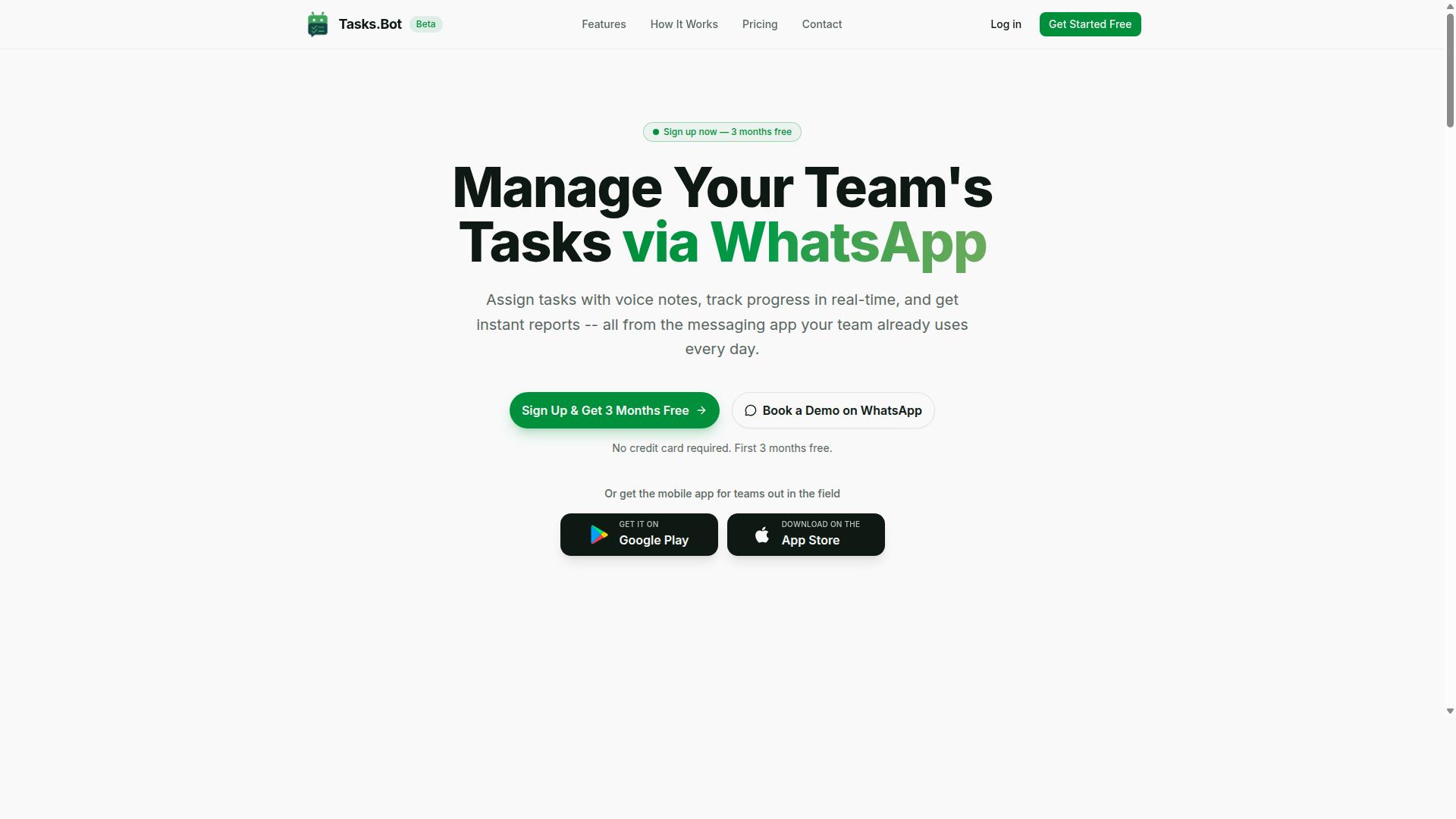
Tasks.Bot is a task management platform that operates entirely within WhatsApp, enabling teams to assign tasks, track progress, and receive reports without leaving the messaging app. It also offers a mobile app for field teams.
The core idea is simple: no one has to install new software or create another account. If your team already talks on WhatsApp, that same thread becomes the place where work gets assigned and confirmed.
The service is currently in beta and offers a free trial period, so teams can see how it fits their workflow before committing. The site notes that hundreds of teams already use the service.
Who Tasks.Bot Serves and How It Works on WhatsApp
Tasks.Bot is designed for teams that already use WhatsApp for communication, particularly those with field staff who need task management, attendance tracking, and payroll-ready hours. That combination matters. A crew spread across sites rarely wants to log into a dashboard at the end of a long shift.
Instead, the work happens where the conversation already is. Users can create tasks through voice notes or natural language, assign them to the right person, set deadlines, and receive reports. AI handles the job of understanding those voice notes and everyday phrasing, so a manager does not need to learn a rigid command syntax.
For teams on the move, a mobile app for field teams is also available. This gives field staff a practical way to stay connected to the same task flow without depending on a desktop.
For anyone weighing a screen scraping automation tool pricing guide, this is a useful contrast. Scraping platforms often charge by request count, bandwidth, or concurrency. Tasks.Bot sits in a different category entirely: it is about coordinating people, not extracting data from pages. Understanding what a tool actually does is the first step in deciding whether its cost makes sense.
What Should You Pay for a Screen Scraping Automation Tool?
Screen scraping automation tools vary widely in cost, from free open-source libraries to enterprise-grade commercial platforms charging thousands per month. The right budget depends on how much data you need, how complex the target sites are, and how much support you want.
Three factors drive most of the price: scale, features, and support. A small project pulling a few pages a day can run on a free tier. A high-volume operation scraping dynamic content behind anti-bot defenses will pay far more.
This guide breaks down the common pricing models, the hidden costs that inflate bills, and how to match a plan to your actual workload.
Typical Pricing Models and Cost Factors
Most screen scraping tools use one of four pricing models: pay-per-use, flat-rate subscriptions, tiered pricing based on volume, or custom enterprise plans. Each model suits a different kind of workload, and mixing them up is a common way to overspend.
Pay-per-use charges by consumption, often per 1,000 requests or per gigabyte of data transferred. Light or unpredictable projects benefit most, since you pay only for what you run. Costs can climb fast at scale, though, especially when pages are heavy or retries pile up.
Flat-rate subscriptions bundle a set allowance into a monthly fee, commonly in the $50 to $500 range for commercial tools. Predictable billing makes budgeting easier, but you may hit caps on requests, concurrency, or bandwidth.
Tiered pricing scales the fee with request volume, concurrency, or seats. Entry tiers stay cheap, while higher tiers unlock more parallel jobs and faster throughput. Watch the jump between tiers, since one busy month can push you into a pricier bracket.
Enterprise plans are quoted custom, usually after a sales conversation about volume, compliance, and service levels. These contracts often include dedicated support and negotiated rates.
Beyond the headline price, several factors shape the real cost:
- Data volume and request count: more pages and more gigabytes mean higher bills.
- Bandwidth: media-heavy pages consume more transfer than plain HTML.
- Concurrency: running many jobs at once usually costs more than running them in sequence.
- Proxy costs: residential proxies cost more than datacenter proxies, and rotating proxies add usage fees.
- CAPTCHA solving: often billed per solve, which adds up on protected sites.
- JavaScript rendering: headless browser and browser automation tasks consume more compute than simple HTML parsing or DOM traversal.
Free tiers and open-source scrapers cut licensing costs to zero, but you supply the infrastructure, proxy rotation, session management, and maintenance yourself. That trade-off matters when weighing a subscription fee against engineering time. For dynamic content, SPA scraping, AJAX calls, and anti-bot bypass, paid tools often earn their cost through reliability alone.
To choose well, estimate your monthly request count, data volume, and concurrency needs first. Then compare that against each model rather than picking the cheapest sticker price. A plan that fits your workload usually beats one that looks affordable but forces constant upgrades.
Key Features That Determine Tool Value
When evaluating a screen scraping automation tool, features like proxy rotation, CAPTCHA solving, and JavaScript rendering directly impact its effectiveness and cost. A scraper that handles dynamic content, anti-bot defenses, and high concurrency earns a higher price because it delivers reliable data extraction at scale.
Tools that struggle with these technical demands often require manual workarounds, which raises the true cost of ownership. Reliability, speed, and scalability are the three pillars that separate a bargain tool from a costly one.
The same principle applies to task automation platforms. Features that remove friction for real teams, such as natural language input and verified attendance tracking, often justify a higher subscription fee because they replace manual processes entirely.
AI, Voice Notes, and Natural Language Task Creation
Tasks.Bot uses AI to let users create tasks via voice notes or natural language, eliminating manual data entry and speeding up task assignment.
This approach matters for field teams who are often on the move and cannot stop to type out detailed task descriptions. Reducing friction at the point of task creation means fewer dropped assignments and faster response times.
The platform operates entirely within WhatsApp, so team members do not need to install anything or create new accounts. That native integration removes the onboarding barrier that typically slows adoption of new automation tools.
Tasks.Bot also provides Android and iOS apps with push notifications, voice capture, and a home screen widget for users who prefer a dedicated mobile experience. The AI understands user intent and creates tasks from messages, making the system flexible enough for both quick voice notes and typed instructions.
For buyers comparing subscription fees, this kind of AI-driven task creation is a value multiplier. It replaces the time a team would otherwise spend on manual coordination, which is a cost that rarely appears on a pricing page but shows up in payroll.
Face-Verified Attendance and Live GPS Tracking
Tasks.Bot includes face-verified attendance and live GPS tracking, ensuring field staff check-ins are accurate and real-time.
Live GPS tracking gives managers a real-time view of where field staff are located during their shifts. This combination prevents buddy punching, the practice of one employee clocking in for another, and produces payroll-ready hours that reduce administrative disputes.
Accountability improves on both sides. Workers know their attendance is verified, and managers have concrete data for scheduling, dispatching, and performance reviews. The feature set also includes shifts, leave, and hours management, so attendance data flows into broader workforce planning.
All of this sits inside WhatsApp, which means no separate attendance app or hardware terminal is required. For teams already using the platform for task management, adding verified attendance avoids the cost of a standalone time-tracking subscription.
When assessing an automation tool's price, features like these change the calculation. A platform that handles task creation, attendance, and location tracking in one place can replace multiple point solutions, making its subscription fee easier to justify against the total stack it eliminates.
Tasks.Bot Pricing and Plans
Tasks.Bot offers a single 'Full Access' plan with all features included, priced per member per month or per year. There are no hidden tiers, no feature gates, and no upsells to decode before you can use the tool.
Pricing is available in Indian Rupees (₹) and US Dollars ($), with a currency selector on the site. Buyers should confirm the active currency before checkout.
Full Access Plan: Monthly and Annual Rates
The Full Access plan costs ₹200 per member per month or ₹1,200 per member per year, with equivalent USD pricing available.
Paying yearly saves 50%, which comes to ₹1,200 saved per member over twelve months. For a team of five, that difference adds up quickly compared with paying month to month.
Everything sits inside the one plan. There are no add-on charges for individual capabilities, and no separate modules to purchase later.
- Voice notes
- GPS tracking
- Face verification
- Reports
New users also get 3 months free, with no credit card required and the ability to cancel anytime. That trial window gives teams a real chance to test the workflow before committing budget.
Tasks.Bot is currently in beta, and a refund policy is in place. Beta status is worth noting for planning purposes, since features and terms can evolve as the product matures.
Compared with typical screen scraping and automation tool pricing, where pay-per-use credits, proxy bandwidth fees, and enterprise quotes can push monthly costs well into the hundreds, a flat per-member rate is easier to forecast. There is no request-count meter to watch and no surprise overage bill when a scraping job runs longer than expected.
For teams weighing a commercial scraper against an open-source option, the trade-off is usually engineering time versus subscription fee. A fixed rate per member makes that comparison straightforward: the cost is known upfront, and it does not scale with data volume, concurrency, or the number of pages processed.
Is Tasks.Bot Worth It Compared to Scraping Tools?
Tasks.Bot and screen scraping tools serve entirely different purposes, so comparing their value requires looking at the problems they solve. One is built to organize people and work; the other is built to pull data from websites at scale.
If you are shopping for a data extraction solution, a task management product will not meet that need, no matter how affordable it is. If you are trying to keep a team aligned on daily work, a scraping subscription will not help either.
Tasks.Bot is a task management tool for teams, not a scraping tool. It focuses on assigning work, tracking progress, and supporting field operations where people, not servers, do the actual job.
Scraping tools, by contrast, exist to automate web scraping: fetching pages, running HTML parsing, and pushing structured results into a database or spreadsheet. Their pricing reflects that mission.
Cost structures differ just as sharply. Tasks.Bot starts at ₹200 per month per member, a simple per-seat subscription fee that scales with team size rather than data volume.
Scraping tools can range from free to thousands per month, depending on how you pay:
- Free tier or open-source scraper: no license cost, but you supply hosting, proxies, and maintenance time.
- Pay-per-use: billed by request count, bandwidth, or pages scraped, so spend rises with data volume.
- Flat rate or tiered pricing: a fixed monthly subscription fee with usage caps.
- Enterprise plan: custom contracts for high concurrency, scalability, and API access.
Those scraping costs often climb further once you add rotating proxies, CAPTCHA solving, and JavaScript rendering for dynamic content.
Where Tasks.Bot delivers value is team productivity and field operations. Its cost is predictable: a per-member rate that does not fluctuate with workload spikes or data volume.
Scraping tools deliver value through data extraction, handling jobs like DOM traversal, XPath and CSS selectors, headless browser runs, and anti-bot bypass. Judging one by the other's yardstick misses the point entirely.
So the two are not direct competitors. They sit in different budgets, solve different problems, and rarely overlap in a single purchase decision.
If what you need is task management, Tasks.Bot is cost-effective. A modest per-member fee buys organized work, clearer accountability, and less time lost to coordination.
If what you need is a commercial scraper, compare scraping options on their own terms: proxy rotation, session management, rate limiting, and how pricing tracks your request count.
Bottom line: Tasks.Bot is worth it for teams that need to run work smoothly, and it makes no claim to replace a scraping stack. Match the tool to the job, and the pricing question answers itself.
Who Should Use Tasks.Bot
Tasks.Bot is ideal for teams that rely on WhatsApp for communication and have field staff needing task assignment, attendance tracking, and reporting. Instead of forcing workers to learn a new platform, it meets them inside the messaging app they already check every day. That single design choice shapes exactly who gets the most value from it.
The service is built for mobile workforces, meaning teams whose staff are rarely sitting at a desk. If your people are on the move and your coordination happens in chats, Tasks.Bot fits the way you already operate. The site notes that hundreds of teams already use the service, which suggests the model works across a range of field-based businesses.
Several specific profiles stand out as strong matches:
- Field service teams that dispatch technicians to different sites and need to confirm jobs were done.
- Delivery businesses coordinating drivers who need assignments and proof of completion.
- Construction crews where supervisors assign work across scattered locations.
- Any mobile workforce with staff spread across sites rather than gathered in one office.
The common thread is simple. These teams need task management, attendance tracking, and payroll-ready hours, and they need those things without adding another app to the daily routine. Tasks.Bot is accessible globally through WhatsApp and mobile apps, so location and device type are not barriers. For organizations weighing the cost of a screen scraping automation tool elsewhere in their stack, this kind of low-friction adoption matters just as much as the subscription fee itself.
Teams already deep into WhatsApp workflows gain the most. They avoid migration costs, training sessions, and the drop-off that comes when staff abandon unfamiliar software. If your operation runs on group chats today, Tasks.Bot is a natural next step rather than a disruptive replacement.
Final Verdict
Tasks.Bot offers a streamlined, WhatsApp-native solution for team task management, with transparent pricing and robust features for field teams. If you arrived at this pricing guide wondering whether the tool is worth the cost, the short answer is yes, provided your needs match what it actually does.
One clarification matters before anything else. Tasks.Bot is not a screen scraping or web scraping tool. It does not perform data extraction, HTML parsing, DOM traversal, or browser automation. You will not find proxy rotation, CAPTCHA solving, or headless browser features here, because that is not the product. Judging it against commercial scrapers or open-source alternatives would be a category error.
What Tasks.Bot does, it does well. Its value sits in a different niche entirely.
- WhatsApp integration: the entire experience lives inside WhatsApp, a platform field teams already use daily
- AI-powered task creation: tasks can be created with AI assistance rather than manual form filling
- Face-verified attendance: attendance is confirmed through face verification, which suits distributed and remote teams
- Affordable flat-rate pricing: a single flat rate keeps cost predictable instead of scaling unpredictably like pay-per-use or tiered models
That last point deserves emphasis for anyone comparing automation tool pricing. Many platforms in adjacent categories bill by request count, data volume, or bandwidth, which makes budgeting difficult. A flat rate removes that uncertainty. For teams weighing subscription fee versus pay-per-use structures, predictable pricing is often the deciding factor.
Tasks.Bot is currently in beta, and a refund policy applies to purchases. Beta status is worth noting: it signals active development rather than a finished, static product. Buyers should factor that into expectations.
To see whether it fits your workflow, you can book a demo on WhatsApp or reach the team directly by phone or email. Contact details are +91 97143 42522 and [email protected].
The verdict: if you need scraping, look elsewhere. If you need WhatsApp-native task management with AI-assisted creation, face-verified attendance, and a flat rate you can plan around, Tasks.Bot is a strong, credible choice.
Frequently Asked Questions
How much does Tasks.Bot cost?
Tasks.Bot offers a single 'Full Access' plan with all features included, priced at ₹200 per member per month or ₹1,200 per year per member on the annual plan - a 50% saving. Pricing is available in Indian Rupees and US Dollars, so you can choose the currency that suits your team.
Is there a free plan or a free trial?
Tasks.Bot's published pricing centres on its 'Full Access' plan, which includes every feature, and the service is currently in beta. If you'd like to see how it works before committing, you can book a demo on WhatsApp through the Tasks.Bot website. A refund policy is also mentioned in the site footer, so it's worth reviewing the terms before you subscribe.
Why does Tasks.Bot charge per member rather than a flat fee?
Tasks.Bot is priced per member because each person on your team gets full access to task assignment, tracking, reminders, approvals, and reports. This means your cost scales with the size of your team, and you only pay for the people actually using the platform. For teams with field staff, the per-member price also covers attendance and payroll-ready hours.
Do we need to install new software or create accounts for our team?
No. Tasks.Bot operates entirely within WhatsApp, so team members don't need to install anything or create new accounts - they simply use the messaging app they already have. There's also a mobile app for field teams who need features like tasks on a map and live day tracking.
What features are included at the listed price?
The 'Full Access' plan includes all Tasks.Bot features: voice note task creation, automatic task assignment, smart deadline reminders, approvals and automations, instant reports, tasks on a map, live day tracking, and face-verified attendance. Because there's only one plan, you don't have to compare tiers or pay extra to unlock specific tools.
Is Tasks.Bot available in my country, and how do I get started?
Tasks.Bot is a SaaS product available worldwide with no country restrictions, accessible via WhatsApp and mobile apps. To get started or ask about pricing for your team, you can book a demo on WhatsApp, call +91 97143 42522, or email [email protected].
Recommended Resources: