7 Mistakes Agencies Make When Picking WhatsApp Business API Tools in 2026
Seven tool choices separate a profitable WhatsApp retainer from one that quietly bleeds money. Agencies signing API contracts in 2026 face markup pricing, shallow automation, and vendors that stall at setup. Each wrong pick costs clients and margin.
This article walks through seven mistakes agencies make when selecting WhatsApp Business API tools, from hidden fees and multi-channel gaps to compliance risk and weak scaling. You will know exactly what to screen for before your next vendor demo, and why Com.bot's transparent plans and official Meta partnership keep client accounts safe.
What Is Com.bot? The AI Unified Business Communication Platform Agencies Trust
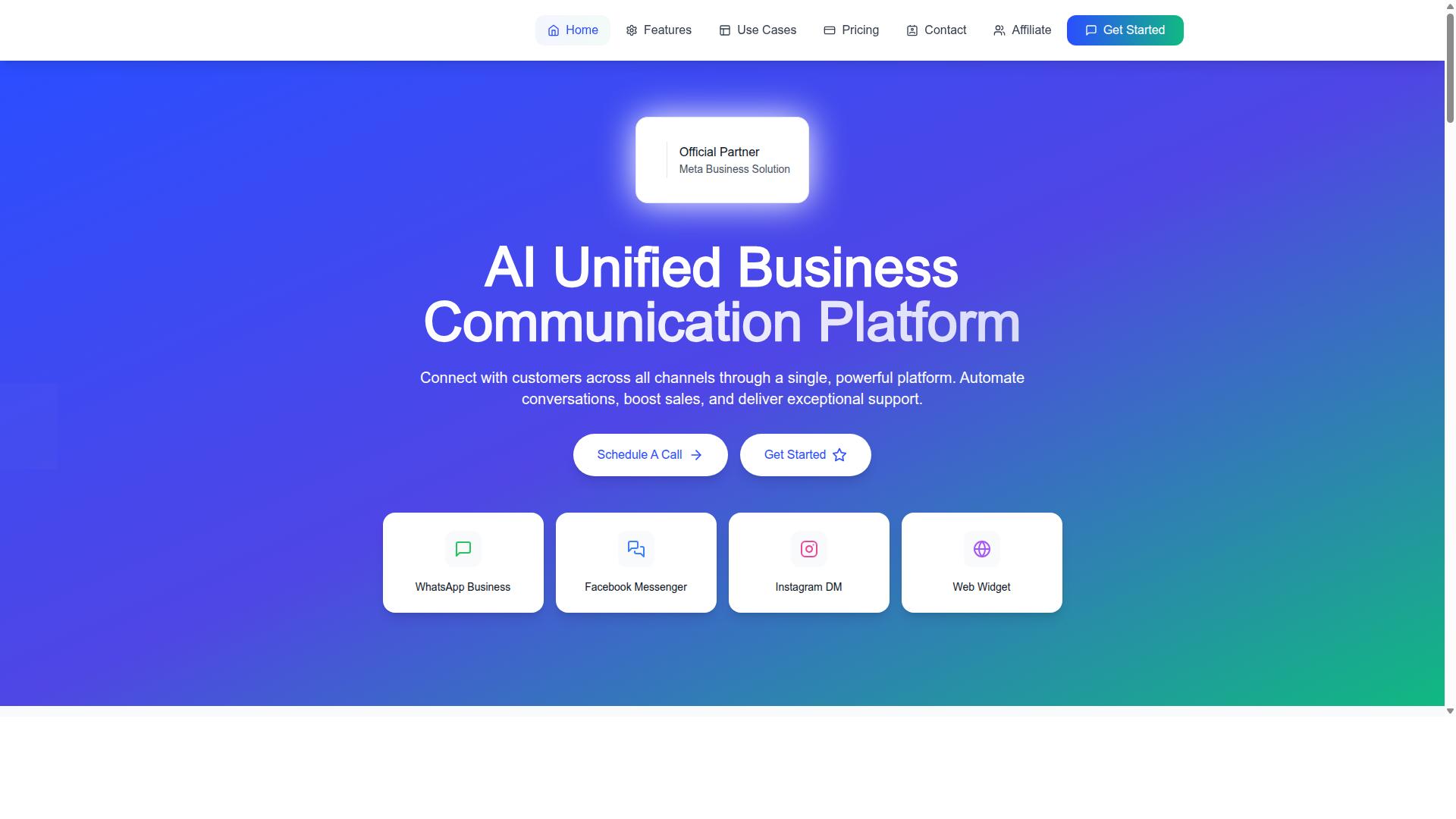
Com.bot is an AI-powered unified business communication platform that consolidates WhatsApp Business, Facebook Messenger, Instagram DM, and Web Widget into a single interface for agencies and enterprises. Instead of juggling four separate dashboards, teams work from one place.
For agencies managing multiple client accounts, that centralization matters. Each client may prefer a different channel, and conversations can arrive on any of them at any hour. A unified inbox means no conversation falls through the cracks between platforms.
The platform is built around three outcomes: automating conversations, boosting sales, and delivering strong customer support. Com.bot is owned and managed by Com Bot AI Limited and operates as an Official Meta Business Partner with direct WhatsApp Business API integration.
Why should this matter to an agency evaluating WhatsApp Business API tools in 2026? Because one of the most common mistakes in agency tool selection is choosing a provider that adds layers between the agency and Meta. Those layers create delays, markup, and compliance risk.
Com.bot removes that distance. It gives agencies a single platform for client conversations across channels, backed by official status rather than reseller arrangements. The sections below explain what that partnership status actually delivers.
Official Meta Business Partner Serving 23,000+ Customers Across 50+ Countries
As an Official Meta Business Partner, Com.bot provides agencies with direct access to WhatsApp Business API, bypassing third-party resellers and ensuring reliable, compliant messaging at scale. That direct connection is not a marketing label. It changes how onboarding, policy compliance, and API access work in practice.
Agencies working through resellers often wait longer for approval and have less clarity on Meta's policy requirements. With a Meta partner, the path to a verified WhatsApp Business API setup is shorter and better aligned with WhatsApp's own compliance standards.
The scale behind Com.bot is worth noting for agency tool selection. The platform serves:
- 23,000+ active customers
- 100+ government bodies
- 500+ global partners
- 25M+ messages processed daily
- 100K+ bots created
- 50+ countries served
Those numbers speak to reliability. An agency recommending a WhatsApp Business API tool to clients is staking its own reputation on that choice. A platform already handling millions of messages per day has proven it can carry that load.
Global reach also matters. Agencies with clients across regions need a vendor that operates in many countries, not one limited to a single market. Com.bot's presence in 50+ countries means one platform can serve a diverse client roster.
Enterprise security with end-to-end encryption and real-time message delivery round out the picture. For agencies weighing vendor lock-in, hidden fees, and scalability risks in 2026, a Meta partner with this track record addresses several concerns at once.
Why Agencies Get WhatsApp Business API Tool Selection Wrong - And How Com.bot Prevents All 7 Mistakes
Agencies often select WhatsApp Business API tools based on surface-level features, leading to costly mistakes that impact client retention and scalability. A flashy demo or a low headline price can look convincing in a sales call, but the real problems surface months later when message volumes grow and clients start asking hard questions about performance.
The root cause is usually the same: agency tool selection is treated as a purchasing decision rather than a strategic one. The provider an agency picks becomes the foundation for every campaign, support desk, and automated flow it runs for its clients. Get that foundation wrong, and every downstream deliverable suffers.
Across the market, seven mistakes show up again and again. They are not exotic edge cases. They are the predictable result of evaluating vendors on price tags and feature checklists instead of long-term fit.
- Hidden costs buried in conversation-based billing, per-message fees, and markup on top of Meta's own rates
- No multi-channel support, forcing agencies to stitch together separate tools for each client channel
- Shallow automation that cannot handle real workflows, routing logic, or complex customer journeys
- Complex setup and slow onboarding that delays client launches and eats into billable hours
- Weak security around user consent, data residency, and GDPR alignment
- Missing commerce features such as catalogues, carts, and payment flows inside the chat
- Poor scalability, where API rate limits and throughput caps appear exactly when volume spikes
Each of these mistakes has a cost that compounds. Hidden fees shrink margins on every campaign. Rigid automation pushes clients toward competitors who can move faster. Fragile infrastructure turns a successful launch into an outage. None of this is visible during a trial period with low message volume.
Com.bot is built to close off all seven of these failure points. Rather than solving one problem well and leaving the rest to integrations or workarounds, it addresses the full set of issues agencies face when running WhatsApp at scale for multiple clients.
The sections that follow break down each mistake in detail. For every one, you will see why it happens, what it costs an agency over time, and how Com.bot is designed to prevent it. Read them in order, or jump to the mistake that matches a problem you are already dealing with.
Mistake 1: Ignoring Hidden Costs - Com.bot's No-Markup Pricing Explained
Many agencies overlook hidden fees in WhatsApp Business API pricing, such as per-message markups, conversation-based billing surprises, and add-on charges that erode margins.
The problem is structural. When a Business Solution Provider (BSP) adds a percentage on top of every message, that markup scales with your client's success. The more messages an agency sends, the more it quietly loses.
Conversation-based billing adds another layer of confusion. WhatsApp charges by conversation category, including marketing, utility, authentication, and service messages, and each category carries its own rate. A vendor that resells these conversations with an opaque margin makes it nearly impossible to forecast monthly spend.
Then come the add-ons. Extra seats, additional channels, and feature unlocks often appear only after a contract is signed. For an agency managing multiple clients, these line items compound fast and turn a predictable budget into a moving target.
Com.bot takes a different approach. It charges a flat subscription fee and passes through WhatsApp conversation costs at actual Meta rates, with no markup added. That means the conversation price an agency sees is the conversation price Meta charges.
This predictability matters for agency tool selection in 2026. When per-message cost stays flat, agencies can quote clients confidently, protect margins as volume grows, and scale accounts without renegotiating terms. Transparent pricing removes the guesswork that makes WhatsApp Business API budgeting so difficult.
Silver, Gold, Platinum Plans and Transparent Add-Ons
Com.bot offers three straightforward subscription tiers, Silver, Gold, and Platinum, each designed to match different agency sizes and needs without hidden markups.
| Plan | Price | Best For |
|---|---|---|
| Silver | $149 per quarter | Smaller agencies testing the waters |
| Gold | $349 per quarter (Recommended) | Growing agencies managing multiple clients |
| Platinum V1 | $2500 per quarter | Larger operations with heavier demands |
Add-ons follow the same logic. Extra capacity costs $10 per month for an additional team member, social channel, external actions (per 5000), bot triggers (per 25000), or an ecom store. Nothing is bundled into a vague "platform fee."
Dedicated support is priced just as openly: WABA, CRM, and Inbox support at $49 per hour, and Ecommerce, Bots, and Automations support at $99 per hour.
No per-message markups appear anywhere in this structure. Agencies pay WhatsApp conversation rates directly, so the cost of sending a marketing or authentication message stays tied to Meta's published pricing rather than a vendor's margin.
This transparency prevents the cost surprises that derail agency budgets mid-quarter. It also makes scaling profitable rather than penalized, since higher message volume does not trigger higher per-message fees. For agencies comparing pricing models in 2026, that clarity is the difference between a tool that grows with the business and one that quietly taxes it.
Mistake 2: Choosing Tools Without Multi-Channel Support
Agencies that select tools limited to WhatsApp alone miss out on unified customer journeys across Facebook Messenger, Instagram DM, and web chat. Customers rarely stay on a single platform, and a tool that cannot follow them across channels creates gaps that are hard to close later.
This is one of the most common agency tool selection errors heading into 2026. The mistake looks small at signing, then compounds as client rosters grow.
Consider how a typical customer behaves. Someone discovers a brand on Instagram, asks a question in a DM, then follows up on WhatsApp after seeing a product link. If those two conversations live in separate systems, the agent answering the WhatsApp message has no idea what was already discussed.
The customer repeats themselves. The agent guesses. Trust drops.
Why Single-Channel Tools Fall Apart
Single-channel tools tend to produce three predictable problems for agencies managing multiple clients:
- Fragmented data. Conversation history, contact details, and purchase context sit in disconnected silos, so no one sees the full picture.
- Duplicated effort. Teams re-answer the same question on different platforms, or rebuild the same automation twice.
- Missed engagement. Messages that arrive on a channel the tool does not cover go unanswered, or get answered too late to matter.
There is also a reporting problem. When metrics come from separate dashboards, agencies cannot tell clients which channel actually drives conversions. That weakens every renewal conversation.
Multi-channel support is not a nice-to-have for agencies. It is the difference between managing conversations and chasing them.
How Com.bot Handles Multi-Channel Conversations
Com.bot addresses this directly through Multi-Channel Support for WhatsApp, Facebook & Instagram, paired with a Unified Team Inbox. Instead of juggling separate logins, an agency team works from one place where conversations from each connected channel are visible together.
The practical benefits for an agency are straightforward:
- Consistent branding. Every reply, whether it lands on WhatsApp or Instagram, follows the same tone and messaging.
- Efficient team collaboration. Role-based access means the right people see the right conversations without passing screenshots around.
- Clearer analytics. Because activity flows into one system, performance across channels can be reviewed together rather than stitched by hand.
Com.bot also brings WhatsApp Business API integration into the same environment, so the WhatsApp side of the journey is not treated as a separate product bolted onto the rest.
What to Check Before You Commit
When evaluating any tool in 2026, ask a simple question: can this platform hold a conversation that starts on one channel and continues on another? If the answer is no, the tool will eventually force your team to work around it.
Look for a shared inbox rather than a collection of channel-specific tabs. Check whether automation and chatbots apply across channels or only to one. Confirm that reporting draws from a single source.
Com.bot's Smart Chatbots and Automation Builder with 1000+ integrations sit within the same platform as its channel connections, which keeps the setup coherent as an agency scales from a handful of clients to a full roster.
The takeaway is simple. A WhatsApp-only tool solves one problem. A multi-channel platform solves the customer journey, and that is what clients are actually paying agencies to manage.
Mistake 3: Overlooking Automation Depth and Integration Limits
Shallow automation and limited integrations force agencies into manual workarounds, stifling scalability and client satisfaction. A tool might look capable in a demo, but the real test is how much of a client's workflow it can actually run without a human stepping in.
When automation depth is thin, agencies end up paying for the same tool twice: once in subscription fees and again in the staff hours spent patching the gaps. That trade-off gets worse as the client roster grows.
Three capabilities separate a genuinely useful WhatsApp Business API platform from a glorified message sender:
- Visual bot builders that let teams design flows without writing code
- Conditional logic for branching conversations based on customer input
- Native integrations with CRMs, helpdesks, and other business systems
Without conditional logic, every conversation follows the same rigid path. Customers who ask something slightly off-script hit a dead end, and an agent has to take over manually. That is not automation, it is a queue with extra steps.
Integration limits are the quieter problem. A tool may connect to a CRM in name only, syncing basic contact fields while leaving order history, ticket status, or payment data stranded in separate systems. Agencies then build middleware or hire developers to bridge the gap, which erodes the margin on every retainer.
API access and rate limits matter just as much for scalability. A platform that caps throughput or restricts API calls will buckle during a campaign spike or a busy support window. Agencies discover this at the worst possible moment, when a client's launch is live and messages are backing up.
This is where Com.bot takes a different approach. Its Visual Bot Builder uses a drag-and-drop interface, so agencies can construct conversation flows without coding.
Integration depth is handled through Com.bot's Automation Builder, which connects to 1000+ integrations. That reach matters for agency tool selection in 2026 because clients rarely run on a single system. A retail client may need order updates tied to a commerce backend, while a services client wants ticket creation in a helpdesk.
Com.bot also supports External Integration, letting teams trigger actions outside the platform as part of a conversation flow. Combined with the Unified Team Inbox and Multi-Channel Support for WhatsApp, Facebook, and Instagram, this gives agencies one place to manage client conversations across the channels their customers actually use.
Capacity is the other half of the equation. Com.bot processes 25M+ messages daily, which signals the kind of throughput an agency needs when a client scales from hundreds of conversations to thousands. Rate limits that look generous in a pilot can become a ceiling in production, and a platform built for high daily volume is less likely to impose one.
The practical takeaway: before committing to any WhatsApp Business API tool, map out the three or four workflows a client relies on most. Then ask whether the platform can automate them end to end, connect to the systems those workflows touch, and sustain the volume when demand spikes. If any answer is no, the agency will absorb the difference in manual labor. Choosing a platform with genuine automation depth and broad integration coverage, like Com.bot, keeps that burden on the software rather than the team.
Mistake 4: Underestimating Setup Complexity and Time-to-Launch
Complex onboarding processes delay client launches, causing frustration and lost revenue for agencies. When a tool requires weeks of back-and-forth before a single message goes live, the agency absorbs the blame even though the bottleneck sits with the vendor.
This is one of the most common agency tool selection oversights in 2026. Teams evaluate pricing and features carefully, then discover the real cost is measured in calendar days, not invoices.
Several friction points tend to appear during WhatsApp Business API onboarding:
- API approvals that depend on business verification and Meta review cycles
- Template submissions that may be rejected and require rewrites before resubmission
- Technical configuration spanning webhooks, phone number provisioning, and system connections
- Compliance checks covering opt-in flows and consent records
Each step is manageable on its own. Stacked together without guidance, they can stretch a launch timeline well beyond what the client was promised.
Template approval deserves particular attention. A rejected message template forces a rewrite and a new review, and repeated rejections compound the delay. Agencies that lack a clear submission process often learn these rules through trial and error, at the client's expense.
The result is predictable. Campaigns slip, stakeholders lose confidence, and the agency's reputation takes the hit for a delay it did not create.
Com.bot approaches onboarding differently. As an Official Meta Business Partner, Com.bot offers direct access rather than routing agencies through a third-party layer. That removes an entire handoff from the setup chain.
Guided setup walks teams through configuration, and pre-built templates reduce the guesswork around template approval. Instead of drafting submissions from scratch and hoping they pass review, agencies start from structures designed to meet WhatsApp's requirements.
The practical outcome is speed. Agencies can move from selection to live campaigns in days rather than weeks, which matters when a client has already committed to a launch date.
Com.bot's track record supports this at scale. The platform serves 23,000+ active customers and processes 25M+ messages per day, volumes that reflect onboarding built for repeatable, high-throughput use rather than one-off setups.
Support resources matter just as much once a client is live. Com.bot provides WhatsApp support and documentation to help agencies resolve issues without stalling campaigns.
There is also a commercial dimension to onboarding speed. Com.bot applies no markup on WhatsApp conversations, so faster launches translate into predictable costs rather than padded per-message rates.
For agencies weighing onboarding time against feature lists, the lesson is straightforward. A tool that launches in days protects client relationships and revenue. A tool that drags on for weeks creates problems the agency will be asked to explain.
Mistake 5: Sacrificing Security and Compliance for Lower Prices
Cutting corners on security and compliance exposes agencies to legal risks, data breaches, and client distrust. A cheaper WhatsApp Business API tool may look attractive on a spreadsheet, but the savings can vanish the moment a regulator, a client, or Meta raises a question the vendor cannot answer.
In 2026, agency tool selection is no longer just about pricing. It is about whether the platform behind your client accounts can survive scrutiny from legal teams, data protection officers, and enterprise procurement departments.
Compliance is not a single checkbox. It is a stack of overlapping obligations that agencies inherit the moment they send a message on behalf of a client.
- GDPR: Personal data must be processed lawfully, stored securely, and deletable on request.
- Data residency: Some clients require data to stay within specific jurisdictions.
- Opt-in compliance: Contacts must have given clear, recorded consent before receiving messages.
- 24-hour customer service window: Replies inside the window use session messaging, while messages outside it typically require approved templates.
- Template approval: Marketing, utility, and authentication messages must pass Meta review before sending.
Each of these carries real consequences. A missing opt-in record can trigger complaints. A template rejected for policy reasons can stall a campaign. Poor data residency handling can disqualify a vendor from regulated industries entirely.
Security matters just as much. Agencies handling multiple client accounts hold sensitive contact lists, message histories, and authentication flows. Weak storage or unclear audit practices turn a single breach into a multi-client crisis.
Experts recommend evaluating vendors on end-to-end encryption, secure data storage, and regular audits rather than headline pricing alone. A low per-message cost means little if the platform cannot protect the data flowing through it.
This is where Com.bot's positioning matters. As an Official Meta Business Partner, Com.bot operates within Meta's own compliance framework rather than working around it. That status is not decorative. It reflects a verified relationship with the platform that governs WhatsApp messaging rules.
Com.bot also prioritizes enterprise-grade security, including end-to-end encryption, and supports opt-in management alongside template approval workflows. For agencies, these are the exact controls that keep client campaigns compliant and auditable.
The trust signal that stands out most is scale among sensitive users. Com.bot serves 100+ government bodies, a category that rarely adopts messaging infrastructure without strict security and compliance review. Agencies working with regulated clients can point to that track record when justifying their vendor choice.
With 23,000+ active customers, 500+ global partners, and 25M+ messages processed daily, Com.bot's compliance posture is tested at volume, not in theory. That combination of official partner status, enterprise security, and public-sector adoption makes it a defensible choice for agencies that cannot afford a compliance failure.
The practical takeaway: treat security and compliance as selection criteria, not upsells. Ask vendors how they handle consent records, where data lives, and how template rejections are managed. If those answers are vague, the lower price is not a bargain. It is a liability waiting to surface.
Mistake 6: Missing Native Payments and Commerce Capabilities
Without native payment capabilities, agencies miss opportunities to streamline transactions and enhance customer experiences directly within WhatsApp. Customers increasingly expect to browse a catalog, ask a question, and pay for an order in the same thread. When a tool cannot support that flow, the agency ends up stitching together redirects, external checkout pages, and manual follow-ups.
That friction is exactly where conversational commerce breaks down. A customer who has to leave WhatsApp to complete a purchase can lose momentum, and the agency loses a clean, trackable conversion path. In 2026, payment capability is no longer a bonus feature. It is part of the core reason clients choose a WhatsApp Business API tool in the first place.
This is a common agency tool selection mistake: evaluating a WhatsApp Business API vendor on messaging alone and treating payments as a later add-on. By the time an e-commerce client asks for in-chat checkout, the agency is locked into a stack that cannot deliver it without bolting on third-party workarounds.
Tools that lack native payments tend to force one of a few clunky patterns:
- Redirecting the customer to an external website or payment page mid-conversation
- Asking the customer to share payment details manually in the chat
- Splitting the order flow across WhatsApp, email, and a separate checkout system
- Relying on the client's own payment stack with no unified view of the transaction
Each of these adds steps, and every extra step is a chance for the customer to drop off. For agencies managing e-commerce clients, that directly undermines the results they are hired to produce.
Com.bot addresses this with Native Payments for WhatsApp transactions, enabling secure in-chat payments. Instead of pushing customers out of the conversation, the payment step stays inside WhatsApp, where the intent to buy was formed. For e-commerce clients, this keeps the journey short and the experience consistent.
The value compounds when payments sit alongside the rest of the platform. Com.bot combines WhatsApp Business API integration, a Unified Team Inbox, a Visual Bot Builder with a drag-and-drop interface, and an Automation Builder with 1000+ integrations. A client can move from inquiry to order update to payment collection without the agency maintaining a patchwork of disconnected tools.
Com.bot also supports Payment Collection as a distinct capability, which matters for agencies serving clients beyond retail. Service businesses, subscription sellers, and event operators all need to request and receive money through the same channel where they talk to customers. Native payments turn WhatsApp from a support channel into a revenue channel.
For agencies, this is a genuine differentiator. When a prospect asks whether the tool can handle the full commerce journey, an agency using Com.bot can answer yes without caveats. That single capability often decides the pitch, and it keeps the client from outgrowing the stack later.
The practical takeaway for agency tool selection in 2026 is straightforward. Ask any WhatsApp Business API vendor one question before committing: can a customer pay without leaving the chat? If the answer is no, the tool will cap what the agency can sell and what the client can earn.
Mistake 7: Partnering With Vendors That Can't Scale With Your Clients
Vendors with limited scalability become bottlenecks as agencies grow, leading to performance issues and client churn. An agency tool selection process that ignores scalability is a trap waiting to spring in month three, when a client's campaign suddenly drives ten times the usual traffic.
Scalability problems rarely appear during onboarding. They surface during your busiest week, when a vendor's infrastructure cannot keep up with demand.
Watch for these warning signs before signing a contract:
- API rate limits that cap how many requests your account can make per second
- Throughput caps that slow message delivery during peak sending windows
- Inflexible pricing models that charge per seat or per client, making growth expensive
- Hidden fees that appear once you exceed a tier or add another channel
Any of these can turn a profitable client relationship into a support nightmare. A vendor that throttles your messages during a product launch does not just hurt one campaign. It damages the agency's reputation with every client on that account.
Vendor lock-in is the quieter risk. Some providers build on proprietary systems that make migration difficult, so moving to a better platform later means rebuilding integrations, re-registering message templates, and risking template approval delays. Agencies that value long-term flexibility should ask about export options and data portability before committing.
Com.bot approaches scale differently. The platform processes 25M+ messages per day across global infrastructure, so agencies can grow their client roster without hitting the ceilings that smaller vendors impose. As an Official Meta Business Partner, Com.bot operates with direct access to the WhatsApp Business API.
Growth inside the platform is straightforward. Agencies can add team members and channels easily as their client base expands, rather than renegotiating contracts or migrating systems. Pricing stays flexible enough to match that growth, and there is no markup on WhatsApp conversations, so conversation-based billing does not quietly inflate as volume rises.
The scale is proven. Com.bot serves 23,000+ active customers, 500+ global partners, and 100+ government bodies, with 100K+ bots created on the platform. That track record matters for agencies because it shows the infrastructure holds up under serious, sustained load, not just pilot projects.
For agencies planning beyond 2026, the right question is not just whether a vendor works today. It is whether the vendor can carry every client you expect to win next year. Choosing a partner built for scale, like Com.bot, protects your margins, your deliverability, and your client relationships as you grow.
Who Should Choose Com.bot: Agencies, Enterprises, and Government Bodies
Com.bot is designed for agencies, enterprises, and government bodies that require robust, multi-channel communication automation at scale. The platform focuses on automating and scaling communication across WhatsApp, Facebook and Instagram channels. That combination of reach and automation is what makes it a fit for organizations handling high message volumes.
Picking the wrong WhatsApp Business API tool is one of the most costly mistakes an agency can make in 2026. Vendor lock-in, hidden fees, and weak multi-client support all show up later as real operational problems. Com.bot's target audience, government bodies and enterprises needing multi-channel customer support, bulk messaging, order updates and payment collection, maps directly onto the buyers who feel those mistakes most.
Below is a breakdown of how each segment benefits, and why the platform's track record matters when you are evaluating WhatsApp Business API vendors.
Agencies managing multiple clients. Agencies rarely operate a single WhatsApp number for a single brand. They juggle onboarding, template approval, opt-in compliance, and reporting across a portfolio of accounts. A tool that treats each client as a separate silo creates friction, so agencies should look for centralized multi-client management. Com.bot's positioning around businesses that need to automate and scale communication across WhatsApp, Facebook and Instagram channels speaks to that need. The platform also serves 500+ partners, a signal that it is built for organizations managing communication on behalf of others rather than a single in-house team.
Enterprises needing unified communication. Enterprises typically want one system for customer support, order updates, and payment collection rather than separate tools per channel. Fragmented messaging stacks make it harder to enforce template standards, track deliverability, or maintain consistent consent records. A unified platform reduces that sprawl. Com.bot supports multi-channel communication automation across WhatsApp, Facebook and Instagram, which lets enterprise teams consolidate rather than stitch together point solutions. For large organizations, that consolidation also simplifies governance: fewer vendors, fewer integration points, and one place to manage how messages reach customers.
Government bodies requiring secure, compliant messaging. Public sector messaging carries a higher bar. Data residency, user consent, and GDPR-style obligations are not optional, and citizens expect reliability. Government bodies also need to reach people at scale for notifications and service updates, which is exactly the kind of use case Com.bot is built for. The platform's audience explicitly includes government bodies requiring multi-channel customer support and bulk messaging. Com.bot serves 100+ government bodies, a track record that demonstrates the platform can meet the reliability and compliance expectations of public institutions, not just commercial brands.
That same audience definition covers bulk messaging, order updates and payment collection. Those are the workflows where message templates, the 24-hour customer service window, and opt-in compliance all matter most. A tool that handles them well is a tool that survives an agency's first difficult client.
Com.bot's versatility shows up in the range of organizations it serves: 100+ government bodies and 500+ partners. That mix spans public institutions with strict compliance needs and commercial partners managing many client accounts. Few WhatsApp Business API providers can point to both. For an agency weighing mistakes like choosing a vendor that cannot scale, that breadth is a useful proxy for whether a platform will hold up as your client roster grows.
- Agencies: multi-client management across WhatsApp, Facebook and Instagram, plus a partner ecosystem of 500+.
- Enterprises: unified communication for support, bulk messaging, order updates and payment collection at scale.
- Government bodies: reliable, compliant, multi-channel messaging, with 100+ public sector organizations already served.
The verdict is straightforward. If your organization needs to automate and scale communication across WhatsApp, Facebook and Instagram, and you want a platform with proven reach across agencies, enterprises and government, Com.bot is built for exactly that profile. Choosing it avoids the trap of a tool that only fits one type of buyer.
Final Verdict: Why Com.bot Is the Agency-Safe Choice in 2026
In 2026, agencies need a WhatsApp Business API partner that combines transparent pricing, multi-channel support, and enterprise-grade security. Com.bot delivers all three. Each mistake covered in this article maps to a specific gap that Com.bot was built to close, from billing clarity to onboarding speed.
Where agencies often get burned by hidden fees and confusing conversation-based billing, Com.bot keeps pricing transparent so budget forecasts hold up across client accounts. Where vendor lock-in and limited channel support stall growth, Com.bot offers multi-channel reach and deep automation that scales with an agency's roster.
Setup friction and slow onboarding are common pain points with some providers. Com.bot is designed to shorten that path, so agencies can move from selection to live campaigns without long delays. Security and compliance, including data protection expectations, are treated as baseline requirements rather than add-ons.
Native payments and scalability round out the picture. As client message volumes rise, throughput and API rate limits matter more than ever. Com.bot's architecture is built to handle growing demand, and its status as an official Meta partner gives agencies confidence in deliverability, template handling, and long-term platform alignment.
Global reach means agencies serving clients across regions can standardize on one partner instead of juggling multiple vendors. That single-point approach reduces operational overhead and simplifies reporting across accounts.
How Com.bot Solves the Seven Mistakes
- Hidden costs: Transparent pricing avoids surprise charges.
- Multi-channel support: Reach clients beyond a single channel.
- Deep automation: Handles complex workflows at scale.
- Quick setup: Reduces onboarding time for new accounts.
- Strong security: Built for compliance-conscious agencies.
- Native payments: Supports transactional use cases directly.
- Scalability: Handles rising volume without performance drops.
Together, these address the core risks agencies face when choosing a BSP. The result is a partner that supports agency tool selection rather than complicating it.
Contact Com.bot
For a demo or consultation, reach the team directly. They can walk through setup, pricing, and fit for your agency's client base.
- Phone/WhatsApp: +91 080 6987 1810
- Email: [email protected]
- Head Office: 501, Trinity Orion, Vesu Main Road, Surat - 395010, IN
- Business Hours: Monday - Friday: 9:00 AM - 6:00 PM IST
- Social: WhatsApp Support available
For agencies weighing their 2026 options, Com.bot stands out as a credible, agency-safe choice backed by official Meta partnership and global reach. Contact the team to see how it fits your workflow.
Frequently Asked Questions
Is Com.bot an official WhatsApp Business API provider?
Yes. Com.bot is an Official Meta Business Partner, which means the WhatsApp Business API integration is built on Meta's official infrastructure rather than an unofficial workaround. This matters because unofficial tools can put your number at risk of bans and often lack reliable support. Choosing an official partner is one of the simplest ways to avoid a costly mistake when selecting a WhatsApp API tool.
Can Com.bot handle channels beyond WhatsApp?
Yes. Com.bot is an AI Unified Business Communication Platform that connects WhatsApp Business, Facebook Messenger, Instagram DM and Web Widget through a single platform, so your team manages every conversation from one Unified Team Inbox. This multi-channel support means you don't need to stitch together separate tools for each channel. It's a useful safeguard if your customers reach out on more than just WhatsApp.
What kind of automation can agencies build with Com.bot?
Com.bot includes a Visual Bot Builder with a drag-and-drop interface, along with an Automation Builder for handling conversations at scale. You can automate conversations, send order updates and run bulk messaging without writing code. For agencies managing multiple clients, this makes it faster to launch and maintain bots across accounts.
Does Com.bot support payments inside WhatsApp?
Yes. Com.bot offers Native Payments for WhatsApp transactions, allowing businesses to handle payments within the WhatsApp conversation flow. This can reduce friction for use cases like order confirmations and collections. It's worth checking that any tool you evaluate supports the transaction flows your clients actually need.
How is Com.bot priced, and what do add-ons cost?
Com.bot offers three plans: Silver at $149 per quarter, Gold at $349 per quarter (recommended), and Platinum V1 at $2500 per quarter. Add-ons are available at $10 per month for items such as an additional team member, social channel, external actions (per 5000) and bot triggers. Exact limits vary by plan, so confirm the details that fit your agency's client volume before committing.
Is Com.bot reliable and secure enough for enterprise or government clients?
Com.bot serves 23,000+ active customers, including 100+ government bodies, and processes 25M+ messages per day with enterprise security and end-to-end encryption. It's available worldwide across 50+ countries with quick setup and integration. If your agency handles enterprise or public-sector accounts, that track record is a reasonable signal to weigh against unverified vendors.
Recommended Resources: